
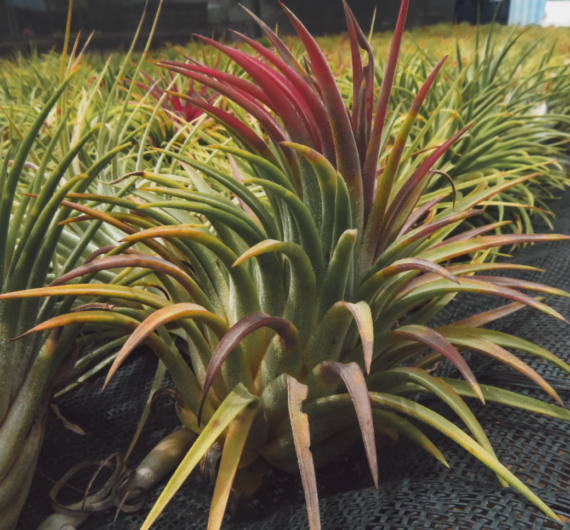
In their natural state, most Tillandsias are green, silvery-green, or grayish due to their trichomes, tiny hair-like structures that reflect light and help them absorb water and nutrients. These neutral tones allow Tillandsias to blend seamlessly into their native environments, such as tree branches or rocky landscapes.
However, Tillandsias can change color depending on several factors, including their blooming phase, environmental conditions, and stress levels. These color changes are not just beautiful—they also offer valuable clues about your plant’s health and life cycle.
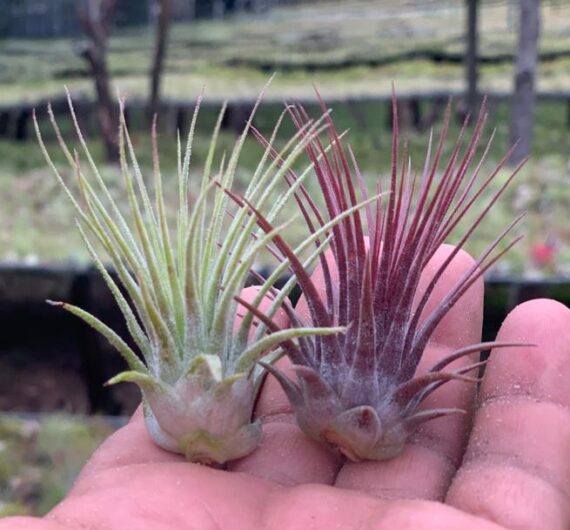
One of the primary reasons Tillandsias change color is their blooming cycle. When a Tillandsia is about to bloom, its leaves may transition from green or gray to vibrant hues of red, pink, purple, or orange. This transformation is part of their reproductive process and serves an important purpose in the wild.
The bloom itself is usually short-lived, lasting anywhere from a few days to several weeks, depending on the species. After blooming, the plant will focus on producing pups (baby plants), which are its way of propagating.
Environmental conditions can also influence the color of a Tillandsia. Here’s how different factors may cause changes:
Light Exposure: Tillandsias thrive in bright, indirect light. However, increased light intensity can cause some species to develop red or purple hues as a natural defense mechanism against the sun. The change acts as a sort of “sunblock,” protecting the plant from excessive UV exposure.
Temperature: Warm temperatures can also trigger color changes, particularly in species native to tropical climates. The heat may encourage the plant to turn brighter colors as part of its natural adaptation.
Stress: Environmental stress, such as under-watering, over-watering, or sudden changes in temperature, can cause a Tillandsia to change color. While some color changes are part of their natural cycle, stress-induced changes may signal that the plant needs attention.
Not all Tillandsias turn bright colors, and the intensity of their color change can vary by species. For example:
If your Tillandsia doesn’t change color, don’t worry—some species are naturally more subtle in their coloration.
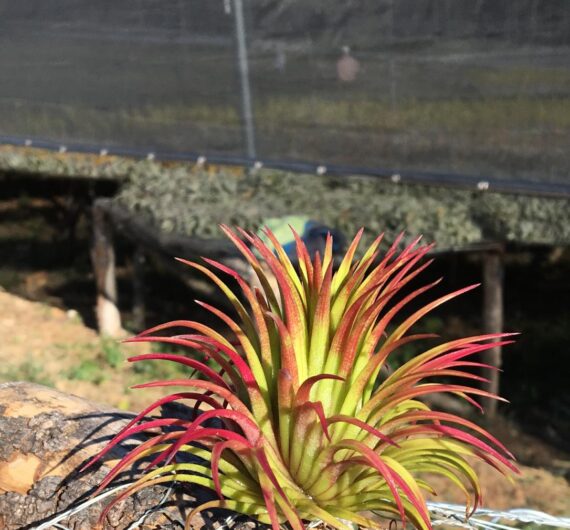
After the color change and blooming phase, the Tillandsia will begin producing pups. These baby plants grow from the base of the mother plant and can be separated once they are one-third to one-half the size of the parent.
It’s worth noting that the mother plant will gradually decline after blooming, as it has fulfilled its reproductive cycle. However, the pups will carry on the plant’s legacy, giving you the opportunity to grow your Tillandsia collection.
If you’re worried about your Tillandsia’s color changes, here are a few things to keep in mind:
The ability of Tillandsias to change color is one of their most fascinating features, signaling blooming, environmental adaptation, or even stress. Whether your air plant is turning bright red, pink, or purple, these changes often reflect its natural lifecycle and care conditions. By understanding what these color changes mean and providing the proper care, you can enjoy the beauty and resilience of these incredible plants for years to come.
Have you noticed your Tillandsia changing color? Share your experiences in the comments below! Whether it’s blooming red or adjusting to sunlight, let’s celebrate the beauty of air plants together.

— shipping to Asia, Europe & America.
Ready to Order?
Let's Talk.
Send us your inquiry and we'll get back to you with pricing and availability.
sales@airplantsworld.com
Teculután, Zacapa, Guatemala, Central America