
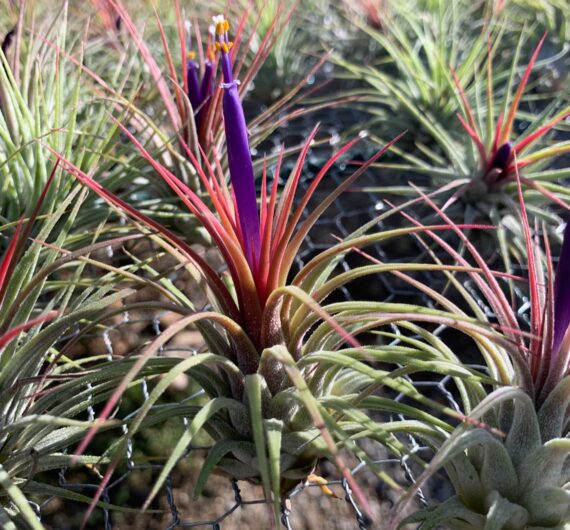
Tillandsias absorb water and nutrients through their leaves, not roots, using specialized structures called trichomes. Because they don’t grow in soil, they rely entirely on their watering routine to meet their hydration needs. Too much water can lead to rot, while too little can cause dehydration and stress. Understanding the signs of overwatering and underwatering will help you create the ideal care routine for your air plants.
Overwatering is one of the most common problems for Tillandsia owners. Since air plants don’t grow in soil, it’s easy to assume they can handle as much water as they’re given. However, too much water can lead to serious issues, such as rot, which can be fatal for the plant.
If your Tillandsia’s leaves feel soft, mushy, or limp, it’s a clear sign of overwatering. Healthy leaves should feel firm and sturdy.
Dark spots on the base or leaves often indicate rot, which is caused by excess moisture that hasn’t dried out properly.
A rotting Tillandsia may emit an unpleasant smell. This is a sign that the plant is decaying from the inside and requires immediate attention.
If the leaves of your Tillandsia are falling off or detaching from the base, it’s likely that the plant has been overwatered and is in serious distress.
A yellowing or browning base is a strong indication that water has collected at the plant’s core and caused rot.
While overwatering is a common mistake, underwatering can also harm your Tillandsias. These plants are resilient and can survive periods of drought, but prolonged dehydration will eventually lead to stress and decline.
When a Tillandsia doesn’t get enough water, its leaves will start to curl inward or wrinkle. This is a defense mechanism to reduce surface area and conserve moisture.
Dry, crispy leaves are a sign that your plant is severely dehydrated. The leaves may also feel brittle to the touch and may even break if bent.
A healthy Tillandsia has vibrant green or silvery leaves. If your plant looks dull, pale, or lifeless, it may not be getting enough water.
If your Tillandsia isn’t growing or producing pups as expected, it could be a sign that it isn’t getting enough water to support new growth.
The best way to avoid these common problems is to create a consistent and balanced watering routine tailored to your Tillandsia’s needs.

— shipping to Asia, Europe & America.
Ready to Order?
Let's Talk.
Send us your inquiry and we'll get back to you with pricing and availability.
sales@airplantsworld.com
Teculután, Zacapa, Guatemala, Central America