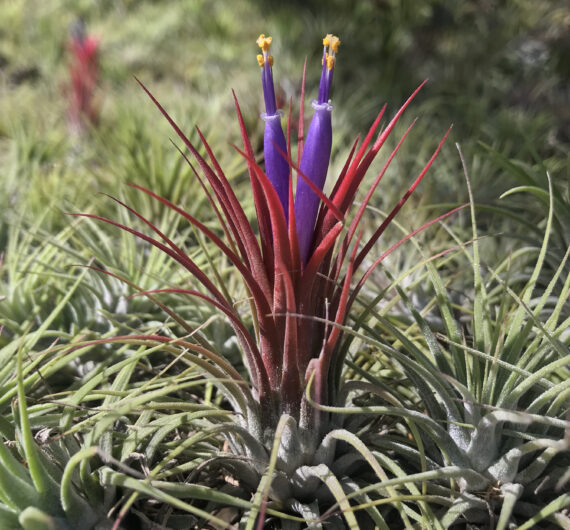
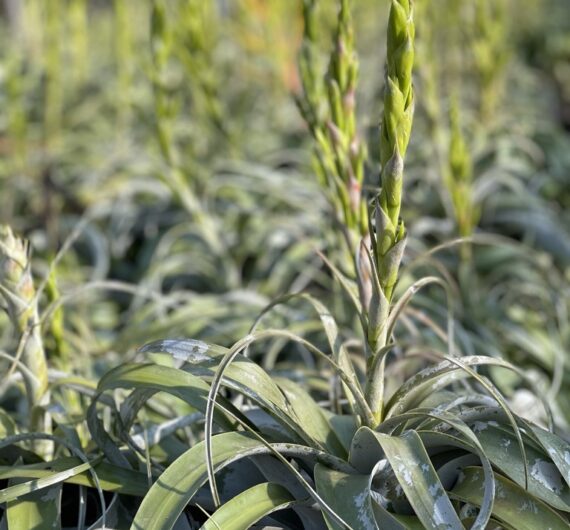
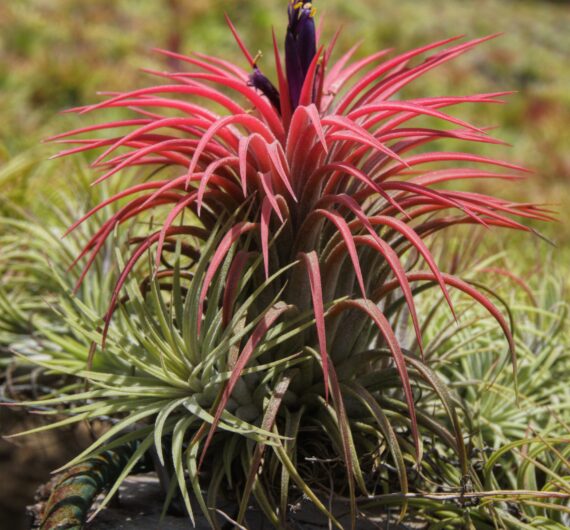
All air plants bloom—once in their lifetime. Every Tillandsia species produces flowers, though the timing, appearance, and duration of the bloom vary. Some plants bloom quickly, while others take years to reach this phase.
Fun Fact: After blooming, Tillandsias shift their energy into producing pups (baby plants), continuing their life cycle.
What Happens When Air Plants Bloom?
1. Color Change
Many Tillandsias, like Tillandsia Ionantha and Tillandsia Brachycaulos, turn vibrant shades of red, pink, or orangebefore blooming. This color change helps attract pollinators in the wild.
2. Flower Production
Air plants produce delicate, tubular flowers that emerge from the center of the plant or from a tall flower spike. These flowers often have bright purple, yellow, or white petals and may last anywhere from a few days to several months, depending on the species.
3. Pollination
In nature, pollinators like hummingbirds, bees, and butterflies help fertilize the flowers. If pollination occurs, the plant may produce seed pods, though this is rare in home settings.
Common Questions About Air Plant Blooms
Q: How long do air plant blooms last?
A: It depends on the species. Some air plants bloom for just a few days, while others, like Tillandsia Xerographica, can have a flower spike that lasts months.
Q: Can I make my air plant bloom faster?
A: Providing bright light, proper hydration, and occasional fertilization can encourage blooming, but each plant blooms on its own timeline.
Q: Should I cut off the bloom after it fades?
A: Yes! Once the flower has dried out and turned brown, you can carefully trim it off to direct more energy toward pup production.
Q: Can an air plant bloom more than once?
A: No, each Tillandsia only blooms once in its lifetime, but it will produce pups that will bloom in the future.
Have you seen your air plant bloom? Share your experience and photos in the comments! Looking for bloom-ready Tillandsias? Browse our collection of healthy, sustainably grown air plants today! 🌿✨